Sacred geometry represents far more than mathematical precision or aesthetic beauty. It embodies a visual language that has shaped human perception, spiritual understanding, and artistic expression across millennia, offering a bridge between the material and the transcendent.

From the spiraling patterns of seashells to the architectural marvels of ancient temples, geometric principles reveal an underlying order to existence. This universal language transcends cultural boundaries, speaking directly to our innate sense of harmony, proportion, and connection to something greater than ourselves.
🔺 The Foundational Patterns of Existence
Sacred geometry encompasses specific shapes, ratios, and patterns that appear consistently throughout nature, architecture, and art. These forms include the circle, triangle, square, pentagon, hexagon, and more complex configurations like the Flower of Life, Metatron’s Cube, and the Sri Yantra. Each carries symbolic significance and mathematical properties that have fascinated philosophers, scientists, and mystics for centuries.
The golden ratio, approximately 1.618, stands as perhaps the most celebrated geometric principle. This proportion appears in the spiraling arms of galaxies, the arrangement of petals on flowers, the proportions of the human body, and countless masterpieces of art and architecture. Leonardo da Vinci extensively studied and applied this ratio in his works, recognizing its capacity to create compositions that feel naturally balanced to the human eye.
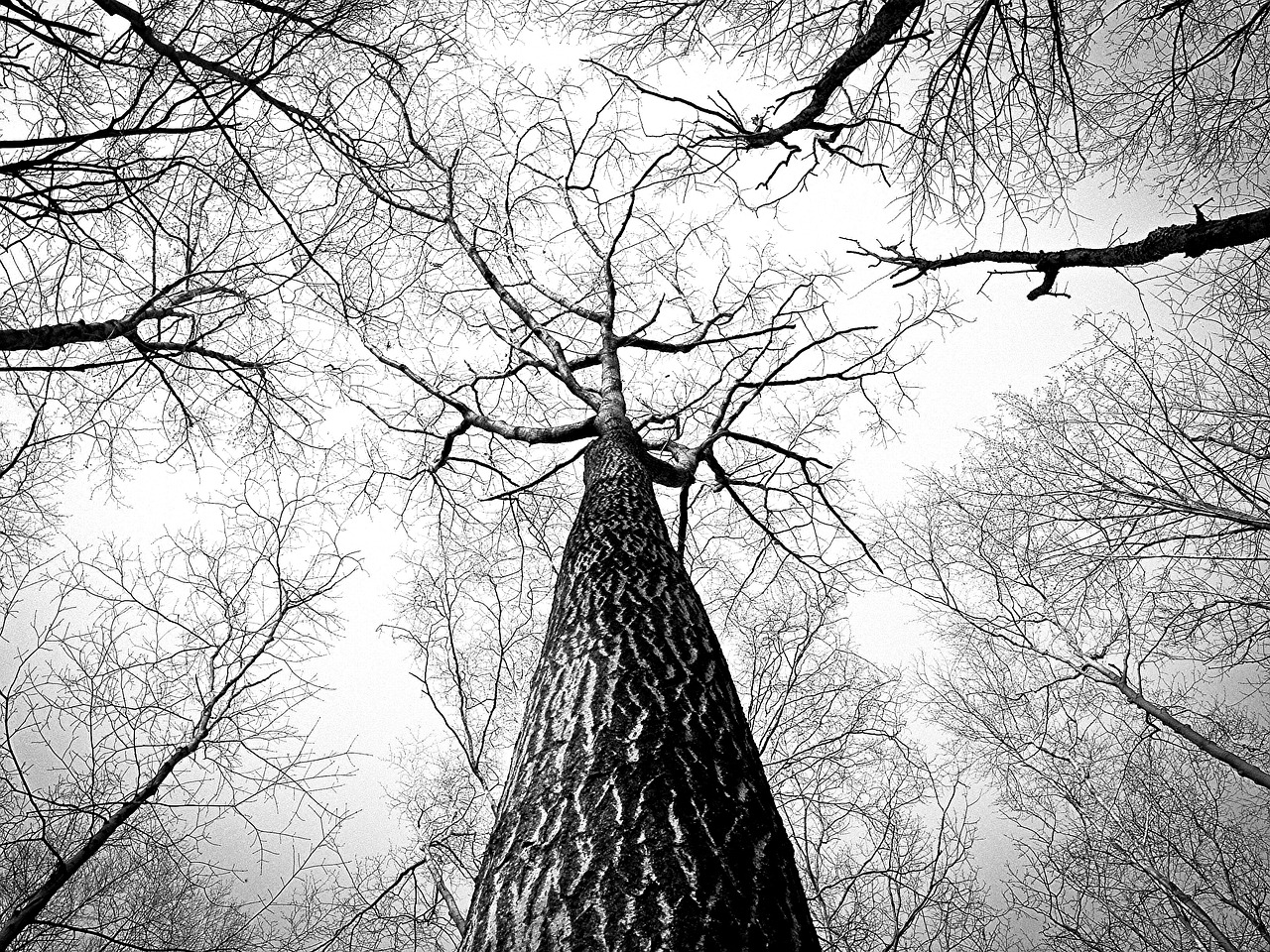
The Fibonacci sequence, closely related to the golden ratio, demonstrates how simple mathematical progressions can generate complex natural patterns. Beginning with 0 and 1, each subsequent number equals the sum of the two preceding numbers: 0, 1, 1, 2, 3, 5, 8, 13, 21, and so forth. This sequence manifests in pinecone spirals, sunflower seed arrangements, and the branching patterns of trees.
Ancient Wisdom Encoded in Stone and Symbol
Ancient civilizations possessed profound understanding of geometric principles, encoding this knowledge into their most sacred structures. The Egyptian pyramids at Giza demonstrate sophisticated mathematical relationships, with the Great Pyramid’s dimensions incorporating pi, the golden ratio, and precise astronomical alignments. These monuments served not merely as tombs but as three-dimensional textbooks of cosmic order.
Gothic cathedrals throughout Europe employed sacred geometry to create spaces that inspired awe and spiritual elevation. Master builders used specific proportions and geometric patterns to manipulate light, sound, and spatial perception, crafting environments designed to lift human consciousness toward the divine. The rose windows adorning these structures represent complex geometric mandalas that transform sunlight into kaleidoscopic visions.
Hindu and Buddhist traditions developed intricate geometric diagrams called yantras and mandalas as tools for meditation and spiritual development. The Sri Yantra, composed of nine interlocking triangles radiating from a central point, represents the cosmos and the human body simultaneously. Practitioners use these diagrams as focal points for concentration, believing that contemplating their perfect symmetry can align consciousness with universal principles.
✨ The Psychology of Geometric Perception
Human perception responds to geometric patterns in profound ways that neuroscience is only beginning to understand. Our brains are pattern-recognition machines, constantly seeking order and meaning in visual information. Symmetric, proportionally balanced forms trigger positive neurological responses, creating feelings of pleasure, calm, and aesthetic satisfaction.
Research has demonstrated that viewing harmonious geometric patterns can reduce stress, lower blood pressure, and promote meditative states. This phenomenon may explain why sacred geometry appears so consistently in religious and spiritual contexts across cultures. These patterns serve as visual anchors that facilitate altered states of consciousness and contemplative awareness.
The concept of visual resonance suggests that certain geometric forms literally resonate with the structure of human perception and cognition. Just as musical harmonies arise from mathematical relationships between frequencies, visual harmonies emerge from geometric proportions that align with how our visual cortex processes information. This creates an immediate, pre-cognitive sense of rightness or beauty.
Geometry as a Universal Language Beyond Words
Unlike spoken or written languages bound to specific cultures, geometric forms communicate across all boundaries. A circle means wholeness and unity whether viewed in Japan, Brazil, or Sweden. A spiral suggests growth, evolution, and cyclical return regardless of cultural context. This universality makes sacred geometry a powerful tool for cross-cultural communication and understanding.
Artists and designers leverage this universal language to create works that speak to fundamental human experiences. The mandala form, originating in Eastern traditions, now appears in therapeutic coloring books worldwide because its radial symmetry and balanced complexity provide accessible entry points for meditative creativity. People without any knowledge of Buddhist or Hindu philosophy naturally respond to these patterns.
Mathematics itself represents the most precise universal language, and geometry serves as its most visually accessible dialect. Where algebraic equations remain opaque to most people, geometric demonstrations can convey complex mathematical truths with immediate clarity. The Pythagorean theorem becomes intuitively graspable when represented as nested squares rather than abstract symbols.
🌿 Nature’s Geometric Blueprint
The natural world operates according to geometric principles that optimize efficiency, strength, and beauty. Honeycomb hexagons provide maximum storage with minimal material. Spider webs employ radial and spiral patterns that distribute structural stress while maximizing capture area. Nautilus shells grow in logarithmic spirals that maintain proportional form regardless of size.
Crystal structures demonstrate how atomic arrangements naturally assume geometric configurations. Salt forms perfect cubes, quartz develops hexagonal prisms, and snowflakes manifest sixfold symmetry. These patterns emerge not from conscious design but from the fundamental forces governing matter at molecular scales, suggesting geometry represents nature’s inherent organizational logic.
Even at cosmic scales, geometric patterns persist. Planets orbit in elliptical paths, galaxies spiral according to mathematical laws, and the distribution of matter throughout the universe exhibits fractal-like patterns of clustering. From quantum foam to galactic superclusters, geometry provides the scaffolding upon which reality constructs itself.
Practical Applications in Modern Design and Technology
Contemporary designers and architects continue drawing upon sacred geometric principles to create spaces and objects that feel intuitively right. Biomimetic design looks to nature’s geometric solutions for inspiration in solving engineering challenges. The Eden Project’s geodesic domes, inspired by buckminsterfullerene molecules, demonstrate how geometric efficiency can create stunning architectural forms.
User interface designers employ geometric principles to create digital experiences that feel balanced and navigable. Grid systems, proportional spacing, and geometric iconography help users unconsciously comprehend relationships between elements. The most successful apps and websites typically adhere to underlying geometric frameworks that create visual hierarchy and flow.
In data visualization, geometric representations transform abstract information into comprehensible patterns. Network graphs, treemaps, and radial diagrams leverage spatial relationships to reveal connections and structures within complex datasets. These applications demonstrate how geometric thinking remains essential for making sense of information in the digital age.
🎨 Artistic Expression Through Geometric Forms
Artists throughout history have explored sacred geometry as both subject and method. Islamic art, prohibited from depicting living forms, developed extraordinarily sophisticated geometric patterns that suggest infinite complexity through recursive symmetry. These tessellations and arabesques create visual experiences of transcendence through purely mathematical means.
Modern artists like Wassily Kandinsky and Piet Mondrian pursued geometric abstraction as a path toward universal visual truth. They believed that by distilling art to its essential geometric components and primary colors, they could create works that communicated directly with the viewer’s soul, bypassing cultural conditioning and personal psychology.
Contemporary sacred geometry art blends traditional forms with digital tools, creating intricate mandalas and fractals of stunning complexity. Digital artists use algorithmic processes to generate geometric patterns that would be impossible to construct manually, exploring the intersection between human aesthetic sensibility and computational possibility. These works often serve both decorative and meditative purposes in modern spaces.
The Connection Between Geometry and Consciousness
Many esoteric traditions teach that geometric forms represent states of consciousness or stages of spiritual development. The point symbolizes unity and source, the line represents duality and relationship, the triangle embodies trinity and manifestation, and so forth. Meditation on these forms supposedly facilitates corresponding shifts in awareness and understanding.
Whether one accepts metaphysical interpretations or not, evidence suggests that engaging with geometric patterns does affect consciousness. Creating or contemplating mandalas produces measurable changes in brain activity, particularly increased alpha waves associated with relaxed alertness. Art therapy frequently employs geometric exercises precisely because they help organize thought and emotion.
The concept of geometric consciousness suggests that different cognitive states correspond to different geometric organizations of neural activity. Linear thinking follows sequential patterns, while creative insight exhibits more complex, multidimensional neural geometries. This framework offers a bridge between subjective experience and objective brain science.
🌍 Sacred Geometry in Cultural and Spiritual Practices
Indigenous cultures worldwide incorporate geometric patterns into ceremonial objects, body art, and sacred spaces. Native American medicine wheels, Aboriginal songline maps, and Celtic knotwork all employ geometric symbolism to encode spiritual teachings and cosmological understanding. These patterns serve mnemonic functions, preserving cultural knowledge across generations without written language.
Yoga practitioners recognize geometric forms in asanas, or physical postures. Triangle pose, pyramid pose, and various symmetrical balances embody geometric principles in three-dimensional space. The practice itself represents an exploration of the body’s geometric potential, seeking optimal alignment and energetic flow through precise positioning.
Sound healing traditions recognize geometric relationships in musical harmonies and overtone structures. Cymatics, the study of visible sound vibrations, reveals that different frequencies create distinct geometric patterns in sand or water. These observations support ancient teachings about the geometric nature of vibration and the fundamental unity of form across different sensory modalities.
Learning and Teaching Sacred Geometry
Educational approaches to sacred geometry range from rigorous mathematical study to intuitive artistic exploration. Some learn through constructing geometric forms with compass and straightedge, following classical methods that reveal relationships through physical practice. This hands-on approach develops spatial reasoning and mathematical intuition simultaneously.
Others approach sacred geometry through contemplative practice, using geometric images as meditation objects. This method emphasizes direct experiential understanding over intellectual knowledge, allowing insights to arise through sustained attention rather than analytical thought. Both approaches offer value, and many practitioners combine them for comprehensive understanding.
Digital tools have democratized access to sacred geometry, allowing anyone to create complex patterns that once required years of training. Drawing apps with symmetry functions enable exploration of radial mandalas, while 3D modeling software facilitates investigation of Platonic solids and more complex polyhedra. These technologies make geometric exploration accessible to visual learners who might struggle with traditional mathematical instruction.
🔮 The Future of Sacred Geometry Understanding
As science advances, new connections emerge between ancient geometric wisdom and contemporary discoveries. Quantum physics reveals geometric patterns in particle interactions, crystallography maps atomic arrangements, and cosmology detects geometric structures in the universe’s large-scale organization. These findings suggest that sacred geometry intuits deep truths about reality that science is only now confirming.
Virtual and augmented reality technologies offer unprecedented opportunities to experience geometric forms immersively. Imagine stepping inside a three-dimensional Flower of Life or watching a Fibonacci spiral grow in real-time around you. These technologies could transform sacred geometry from abstract concept to visceral experience, potentially unlocking new dimensions of understanding.
The integration of sacred geometry principles into artificial intelligence and machine learning represents another frontier. Neural networks already employ geometric transformations to process information, and researchers explore topological approaches to understanding how AI systems organize knowledge. These developments may reveal that geometric thinking represents not merely human aesthetic preference but fundamental principles of intelligence itself.
Personal Practice and Daily Integration
Incorporating sacred geometry into daily life need not require esoteric knowledge or spiritual commitment. Simply surrounding yourself with geometrically harmonious objects and spaces can positively influence your mental state and perception. Choose art, furniture, and decorative elements that exhibit balanced proportions and pleasing symmetry.
Creative practices offer direct engagement with geometric principles. Drawing mandalas, folding origami, arranging objects in patterns, or photographing natural geometric forms all develop geometric awareness while providing meditative benefits. These activities quiet the verbal mind while activating spatial and visual intelligence.
Observational practice cultivates perception of geometry in everyday surroundings. Notice the radial symmetry of flowers, the branching patterns of trees, the tessellations of pavement stones, the proportions of buildings. This attention transforms ordinary environments into galleries of geometric wonder, revealing the underlying order that permeates existence.

💫 The Transformative Power of Geometric Awareness
Developing sensitivity to sacred geometry fundamentally alters perception. What once appeared as random chaos reveals itself as ordered complexity. This shift doesn’t require mystical belief but simply attentiveness to patterns that were always present. The transformation lies not in the external world but in the observer’s capacity to recognize connections and relationships.
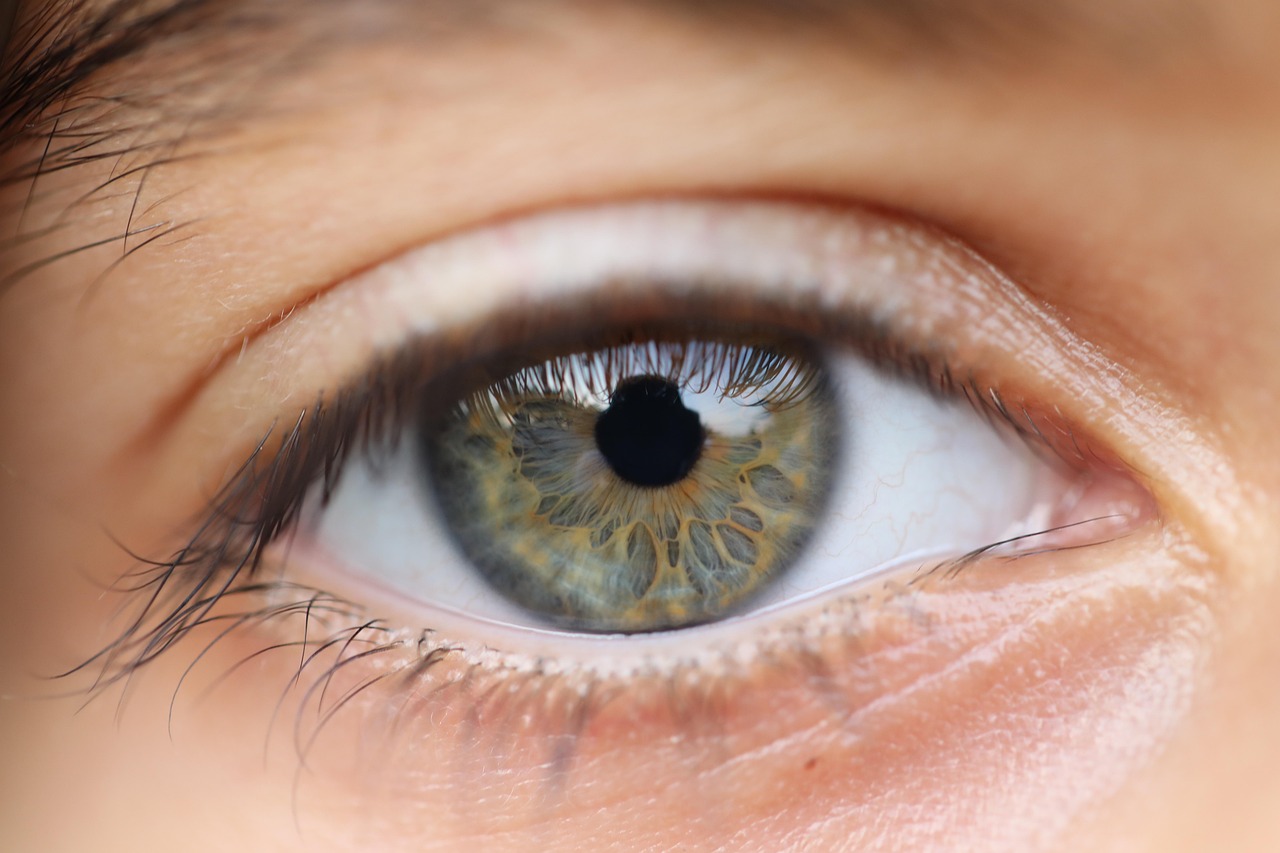
This geometric awareness fosters a sense of participation in universal patterns. Recognizing the same spiral in your fingerprint, a fern frond, and a galaxy creates visceral connection across scales. You contain and are contained by the same geometric principles, suggesting profound unity beneath apparent separation.
Ultimately, sacred geometry offers a visual language for contemplating existence’s deepest questions. It bridges art and science, intuition and logic, individual and universal. Whether approached through mathematical rigor, artistic expression, spiritual practice, or simple aesthetic appreciation, these timeless patterns continue revealing new dimensions of meaning and beauty to each generation that encounters them.