
For thousands of years, humans have gazed upward, seeking meaning in the celestial dance above. Long before modern psychology emerged, astrological charts served as mirrors for the soul, offering profound insights into personality and destiny.

Ancient civilizations understood something remarkable: the patterns of stars and planets could unlock hidden dimensions of human consciousness. These cosmic blueprints became humanity’s first systematic approach to self-discovery, creating a language for exploring the psyche centuries before Freud or Jung entered the scene.
🌟 The Ancient Origins of Celestial Self-Knowledge
Mesopotamian priests were among the first to document systematic connections between celestial movements and human characteristics. Around 2000 BCE, Babylonian astronomers began recording planetary positions at birth, believing these cosmic snapshots captured essential soul qualities. This practice spread throughout the ancient world, evolving into increasingly sophisticated systems of interpretation.
Egyptian temples housed priest-astrologers who counseled pharaohs using detailed astronomical observations. Greek philosophers like Ptolemy later codified these traditions into comprehensive frameworks that influenced Western thought for millennia. The zodiac system we recognize today emerged from this rich cross-cultural exchange of astronomical wisdom and psychological observation.
These early practitioners weren’t merely fortune-tellers. They were proto-psychologists, developing symbolic vocabularies to describe personality differences, emotional patterns, and developmental challenges. Their methods represented humanity’s first organized attempt to categorize and understand psychological diversity.
The Birth Chart as Psychological Blueprint
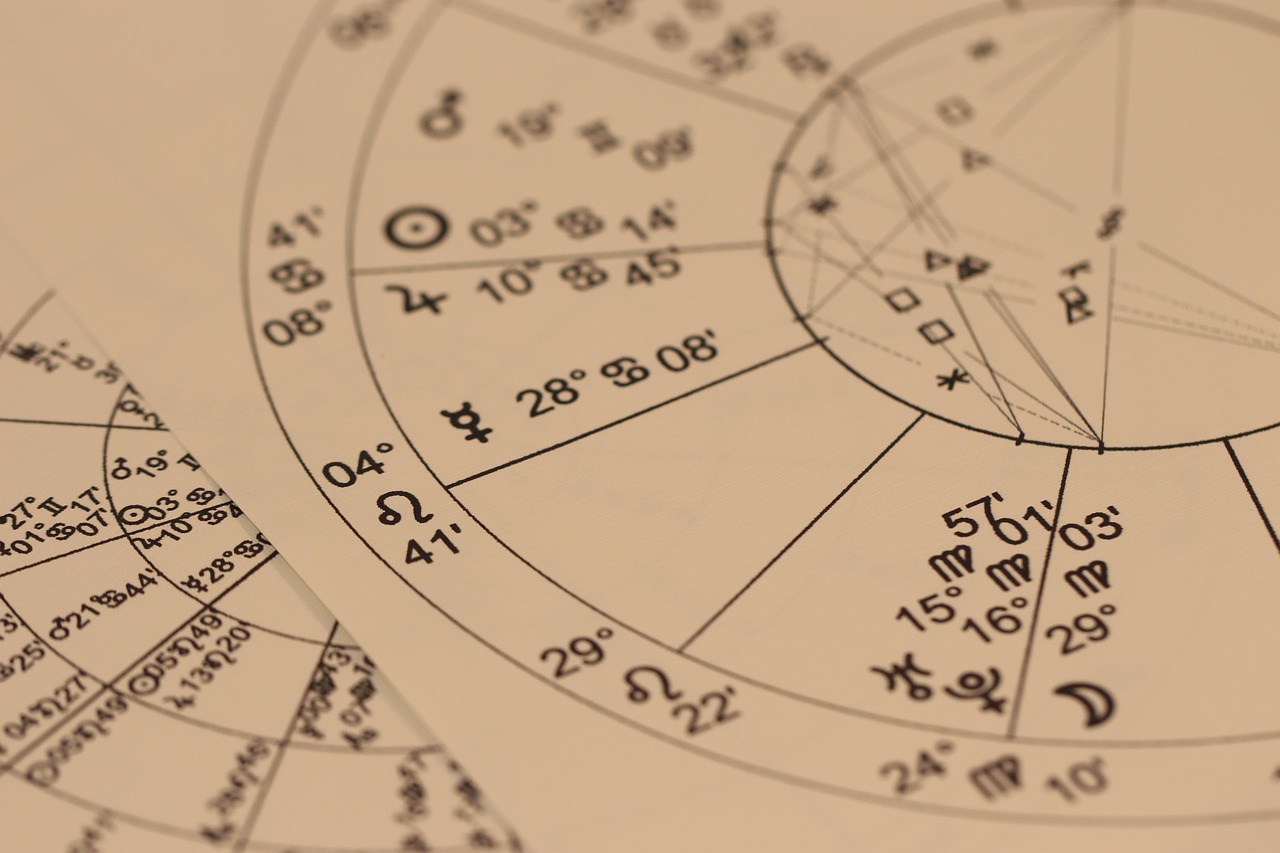
An astrological birth chart functions as a symbolic map of consciousness frozen at the moment of birth. This circular diagram divides the sky into twelve houses, each governing different life domains—relationships, career, spirituality, and communication. Planetary placements within these houses create unique psychological signatures.
The sophistication of this system is remarkable. Rather than reducing people to simplistic sun sign stereotypes, comprehensive chart analysis considers dozens of factors: planetary positions, angular relationships called aspects, elemental balances, and house placements. This complexity allows for nuanced psychological portraits that honor human individuality.
Medieval Islamic scholars preserved and expanded astrological knowledge during Europe’s Dark Ages. Their mathematical refinements and psychological insights later sparked Renaissance interest in chart interpretation as a tool for self-understanding. Figures like Marsilio Ficino explored astrology’s capacity to reveal soul purpose and developmental pathways.
Core Components of Astrological Psychology
Traditional astrology identified several key psychological dimensions mapped through celestial symbols:
- The Sun – Core identity, conscious ego, and vital life force
- The Moon – Emotional nature, unconscious patterns, and nurturing needs
- Mercury – Communication style, thought processes, and learning approaches
- Venus – Values, aesthetic preferences, and relationship patterns
- Mars – Drive, assertion, anger expression, and passion
- Jupiter – Growth orientation, belief systems, and optimism
- Saturn – Structure, discipline, fears, and developmental challenges
This planetary symbolism created a psychological vocabulary centuries before modern terminology emerged. What ancient astrologers called “Saturn afflictions” resembles what psychologists now identify as anxiety disorders or limiting beliefs. “Mars-Venus conflicts” parallel contemporary discussions about balancing assertion with receptivity.
Astrology’s Contribution to Personality Typology
The twelve zodiac signs represent archetypal personality patterns, creating one of history’s earliest typology systems. Each sign embodies distinct behavioral tendencies, emotional expressions, and cognitive styles. This framework allowed people to recognize and name their psychological differences.
Fire signs (Aries, Leo, Sagittarius) describe enthusiastic, action-oriented temperaments. Earth signs (Taurus, Virgo, Capricorn) capture practical, grounded personalities. Air signs (Gemini, Libra, Aquarius) represent intellectual, communicative types. Water signs (Cancer, Scorpio, Pisces) express emotional, intuitive natures.
This elemental classification system predated modern personality frameworks by millennia. The Myers-Briggs Type Indicator and Big Five personality model emerged only in the 20th century, yet they echo astrological insights about fundamental psychological differences. Both systems recognize that people process information differently, relate to others variably, and pursue distinct values.
The Houses: Life Domains and Psychological Development
The twelve astrological houses map psychological territory with remarkable precision. The first house governs self-image and physical presence. The fourth house relates to family origins and emotional foundations. The seventh house addresses partnership dynamics and shadow projection. The tenth house explores public identity and vocational calling.
This house system anticipated developmental psychology’s understanding that humans navigate distinct life domains requiring different psychological skills. A person might feel confident in career matters (tenth house) while struggling with intimate relationships (seventh house). Chart analysis revealed these uneven developmental patterns, guiding individuals toward growth areas.
Medieval astrologers used house analysis for what we’d now call life coaching. They identified psychological blind spots, unexplored potentials, and developmental tasks requiring attention. This consultative practice closely resembles modern therapeutic and counseling approaches focused on self-awareness and intentional growth.
Psychological Aspects: Internal Dynamics and Conflicts ⚡
Perhaps astrology’s most sophisticated psychological contribution involves aspects—angular relationships between planets. These geometric patterns describe internal psychological dynamics, conflicts, and harmonies operating within the psyche.
A square aspect (90-degree angle) represents internal tension requiring integration. Someone with Moon square Saturn might experience conflict between emotional needs and self-discipline, paralleling what therapists identify as tension between inner child needs and critical inner voices. Opposition aspects (180 degrees) suggest polarities requiring balance, similar to dialectical tensions in modern psychology.
Trine aspects (120 degrees) indicate natural talents and easy psychological flow. Sextile aspects (60 degrees) suggest opportunities for development. Conjunction aspects (0 degrees) blend planetary energies, sometimes harmoniously, sometimes problematically—much like how different personality parts can either integrate or clash.
This aspect doctrine created a sophisticated model of internal psychological complexity. Rather than viewing personality as uniform, astrological chart analysis recognized what modern psychology calls subpersonalities, internal conflicts, and ego states. A single chart might show dozens of such internal dynamics, creating a rich psychological portrait.
Transits and Progressions: Psychological Development Over Time
Ancient astrologers didn’t view personality as static. They developed timing techniques—transits and progressions—that mapped psychological development across the lifespan. These methods anticipated developmental psychology’s understanding that humans undergo predictable growth phases and transformative periods.
The Saturn return (occurring around age 29 and 58) describes a maturation crisis requiring increased responsibility and authenticity. This astrological concept closely parallels Erik Erikson’s psychosocial stages and Daniel Levinson’s seasons of life theory. Both frameworks recognize that specific ages bring characteristic psychological challenges and opportunities.
Outer planet transits describe longer developmental cycles. Uranus transits correlate with individuation periods requiring authenticity and change. Neptune transits describe spiritual awakening or dissolution of ego boundaries. Pluto transits map profound transformation and psychological death-rebirth processes—concepts later explored by depth psychologists like Jung and Stanislav Grof.
Predictive Astrology as Anticipatory Guidance
While modern psychology generally avoids prediction, astrological timing techniques offered anticipatory guidance. Knowing that challenging transits approached allowed psychological preparation. This forward-looking perspective helped people contextualize difficult periods within larger developmental narratives.
Contemporary crisis intervention recognizes the value of anticipatory guidance—preparing people for predictable stressors. Military families receive deployment preparation. Medical patients learn what recovery stages to expect. Astrological consultation served similar functions, helping clients anticipate and prepare for transformative life passages.
Jung and the Modern Astrological Renaissance 🔮
Carl Jung represented the pivotal bridge between ancient astrological wisdom and modern psychology. Though initially dismissive, Jung eventually recognized astrology’s sophisticated symbolic system for describing psychological types and dynamics. He incorporated astrological concepts into his analytical psychology, particularly regarding synchronicity and the collective unconscious.
Jung’s personality typology—introverted/extraverted, thinking/feeling, sensing/intuition—directly parallels astrological concepts. His recognition of archetypes resonates with zodiacal symbolism. His concept of individuation closely resembles astrological descriptions of fulfilling one’s birth chart potential. Jung even cast charts for his patients, finding them clinically useful for understanding psychological patterns.
Following Jung’s lead, many mid-20th-century astrologers began emphasizing psychological rather than predictive applications. Figures like Dane Rudhyar pioneered “humanistic astrology,” explicitly framing chart interpretation as a tool for self-understanding and conscious development rather than fatalistic fortune-telling.
Psychological Astrology as Modern Practice
Today’s psychological astrologers function essentially as spiritual counselors and life coaches. They help clients understand behavioral patterns, relationship dynamics, vocational directions, and developmental challenges. This practice closely resembles therapeutic consultation, though operating within an astrological rather than clinical framework.
Modern astrological software has made detailed chart calculation accessible to everyone interested in self-discovery. Apps now provide instant birth chart analysis, daily transit updates, and compatibility reports. This democratization allows individuals to engage astrology’s psychological insights without necessarily consulting professional practitioners.
Scientific Skepticism and Symbolic Truth
Modern science generally dismisses astrological claims about planetary influences on personality. Controlled studies fail to validate predictive accuracy or personality correlations. Gravitational and electromagnetic planetary effects are astronomically negligible compared to nearby objects like hospital equipment present at birth.
However, dismissing astrology’s psychological contributions based on failed causal mechanisms misses important insights. Astrology functions brilliantly as a symbolic system—a projective technique similar to Rorschach inkblots or Tarot cards. The chart provides a complex symbolic structure onto which people project psychological material, facilitating self-reflection and discovery.
This symbolic approach doesn’t require believing planets cause personality traits. Instead, the zodiacal symbols serve as psychological mirrors, helping people recognize and articulate their inner experiences. Whether celestially determined or psychologically projected, the insights generated can be genuinely transformative.
The Barnum Effect and Personal Meaning
Skeptics correctly note that astrological descriptions often employ the Barnum effect—statements vague enough to apply to most people. However, this criticism overlooks how meaning-making operates psychologically. Even generic statements can catalyze profound self-reflection when people actively engage them within personal contexts.
Psychotherapy research demonstrates that theoretical orientation matters less than therapeutic alliance and client engagement. Similarly, astrology’s effectiveness may depend less on objective accuracy than on how meaningfully people engage the symbolic material. The chart becomes a conversation starter between conscious and unconscious dimensions of self.
Enduring Legacy: Astrology’s Gifts to Psychology 🎁
Regardless of scientific validity, astrology pioneered several psychological insights that remain relevant:
- Recognition that people differ fundamentally in temperament and psychological structure
- Understanding that personality involves multiple dimensions and internal dynamics
- Appreciation that psychological development unfolds across predictable life stages
- Recognition that self-knowledge requires symbolic languages and interpretive frameworks
- Understanding that psychological growth involves integrating conflicting internal parts
Modern personality psychology, developmental theory, and therapeutic practice all incorporate insights first articulated through astrological frameworks. While the language changed from planets and houses to traits and schemas, the underlying psychological wisdom persists.
Astrology also demonstrated that self-discovery requires interpretive frameworks—symbolic systems that organize and illuminate psychological experience. Whether through zodiacal symbols, psychological theories, or spiritual traditions, humans need meaning-making structures to understand themselves. Astrology provided such a framework for millennia before modern alternatives emerged.
Contemporary Relevance in the Digital Age
Astrology has experienced remarkable resurgence among younger generations seeking meaning and self-understanding. Millennial and Gen-Z interest in astrological self-discovery reflects broader cultural trends: declining religious affiliation, increased therapeutic awareness, and desire for personalized guidance navigating complex modern life.
Social media amplifies this interest, with astrology memes, compatibility discussions, and transit updates circulating widely. While some engagement remains superficial, many people seriously explore birth charts as tools for psychological insight. This contemporary practice continues astrology’s ancient function—providing symbolic frameworks for self-discovery and meaning-making.
The digital age has also enabled sophisticated chart analysis accessible to anyone with internet connection. What once required consulting expensive specialists now appears instantly through apps and websites. This accessibility democratizes self-discovery tools previously limited to educated elites.
Integrating Ancient Wisdom with Modern Understanding
The most productive contemporary approach neither dismisses astrology as superstition nor accepts it uncritically as objective truth. Instead, recognizing astrology as a sophisticated psychological symbolism honors both its historical contributions and modern scientific understanding.
Astrology pioneered psychological insights when no other frameworks existed. It created language for personality differences, mapped internal psychological dynamics, recognized developmental stages, and provided tools for self-reflection. These contributions deserve recognition even as we acknowledge modern psychology’s empirical advances.
For individuals seeking self-discovery, astrological charts offer rich symbolic material for exploration. Engaging birth chart symbolism—whether literally believed or approached metaphorically—can catalyze valuable self-reflection, revealing patterns, conflicts, and potentials that might otherwise remain unconscious.
The wisdom lies not in whether Saturn actually causes anxiety or Venus determines relationship patterns, but in how these symbols help us recognize, name, and work with psychological realities. Astrology provided humanity’s first psychological mirror—a function it continues serving for those who engage its symbolism thoughtfully.
As we advance in psychological understanding, we can appreciate astrology’s pioneering role while integrating its insights with evidence-based approaches. The stars may not determine our fates, but the symbolic language developed by observing them continues illuminating the mysterious depths of human consciousness and the eternal quest for self-knowledge.